
Titan Rope Hero: Vice City
SKYVERTY COMPANY LIMITEDAction
4.32.00 Reviews
- Version
- 1.0.5
- Installs
- 1.00M
- Age Rating
- Everyone
Screenshots
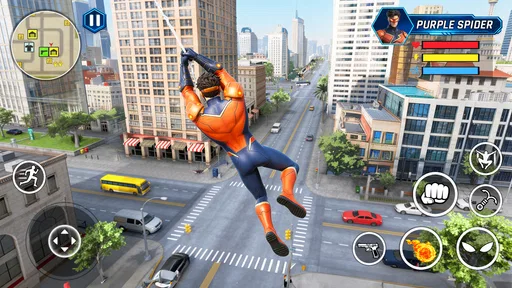
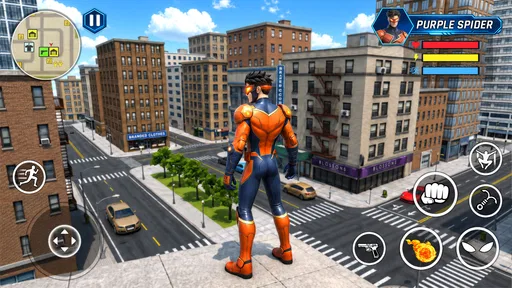
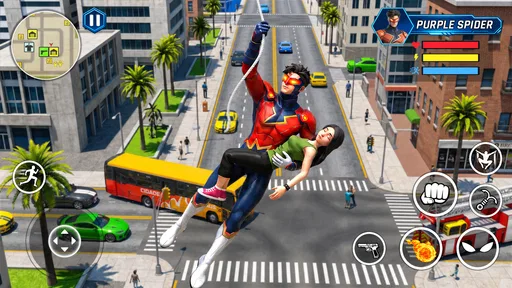
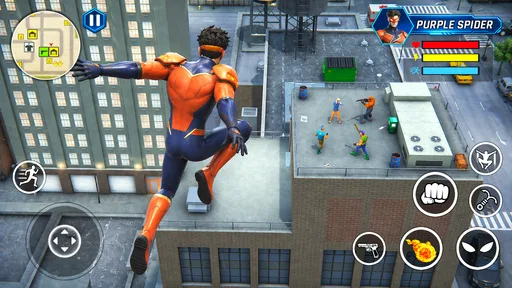
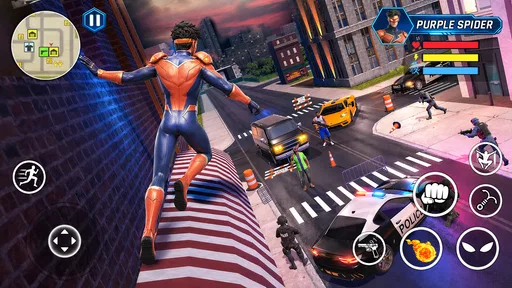
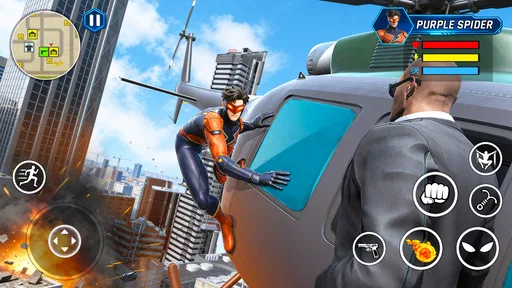
Our Review of Titan Rope Hero: Vice City
 Analysis by Appyee
I approached Titan Rope Hero: Vice City as a quick-action game rather than a long, story-heavy adventure. Its central appeal is easy to understand: you move through a city with a rope, take on fights, and play as a powerful titan-style hero. That combination makes it immediately approachable, especially when I want something more active than a puzzle game but less demanding than a complicated role-playing title.
The game is free, carries an Everyone age rating, and belongs to the Action category. It comes from SKYVERTY COMPANY LIMITED and has already passed the million-install mark, with a 4.2 average from roughly twelve hundred ratings. Those figures suggest that it has found a reasonably broad audience, but they do not replace hands-on judgement. What matters to me is whether the swinging and fighting remain enjoyable after the first few minutes, whether the game feels manageable on an everyday phone, and whether its limitations become distracting during longer sessions.
How the swinging and fighting feel in everyday play
The rope movement gives the game its identity. Instead of simply walking from one fight to another, I can treat the city as a space for movement and momentum. That makes even a short session feel more active: I can spend a few minutes travelling, testing routes, or looking for the next confrontation without needing to commit to a large mission. The titan theme also gives ordinary movement a more exaggerated, action-focused character.
I found the best rhythm comes from separating travel from combat in my mind. Swinging is about choosing a direction and keeping the hero moving, while fighting requires attention to positioning and timing. If I rush both at once, the screen can become visually busy and my decisions become less deliberate. A useful habit is to finish a movement sequence before starting a fight whenever the surroundings allow it. That small pause makes the action easier to read and reduces accidental movement.
The store summary presents the experience as one built around swinging, fighting, and ruling Vice City. In practice, that means the appeal is less about a delicate simulation and more about the feeling of controlling a larger-than-life character. Players who enjoy experimenting with movement and causing energetic action will probably connect with it quickly. Players looking for a carefully paced campaign, deep character development, or a highly technical combat system may find the presentation too straightforward.
For a normal everyday scenario, I can imagine opening the game while waiting for an appointment or taking a short break after work. I would use the first few minutes to move around the city, then focus on a handful of fights rather than expecting a complete gaming session with a major conclusion. That works well because the basic premise is understandable without a long tutorial or a large amount of preparation. It also means the game is easy to put down when time runs out.
What affects the feeling of speed
Perceived speed is not only about how quickly the hero crosses the screen. It also comes from how quickly I can understand the next landing point, recognize an opponent, and recover after an awkward move. Rope-based travel can feel fast when the direction is clear, but it can feel less fluid when I need to correct a jump or reorient myself in a crowded area. I would therefore judge the game by control clarity as much as by raw movement.
My practical advice is to learn the movement in open areas before attempting a fast route through denser parts of the city. That gives me time to understand how much correction is possible and how forgiving the hero feels after a missed line. It is a small but important distinction: a game can appear rapid while still feeling slow if every mistake requires a long recovery.
Combat benefits from the same approach. Rather than tapping constantly, I prefer to watch the space around the hero and choose a safer moment to engage. This is particularly useful when several opponents or obstacles compete for attention. The action remains more readable when I move with a purpose instead of treating every button press as progress.
Where longer sessions may become demanding
The heavier moments are likely to come when movement, enemies, and visual activity happen together. Even without assigning a technical measurement, that is the kind of scene where a mobile action game can feel more demanding than it does during simple travel. On a device with limited resources, busy encounters may be the first place where responsiveness feels less consistent. I would not assume that a phone capable of launching the game will deliver the same comfort during every situation.
There is also a human performance cost. Continuous swinging and fighting asks for more attention than a relaxed idle game, and repeated corrections can become tiring during a long session. I get more enjoyment by alternating action with short pauses instead of treating the game as something to play at maximum intensity for a long period. This is not a flaw unique to the title; it is part of the trade-off created by its movement-focused design.
A useful workflow is to begin a session with movement practice, use the middle portion for combat, and stop after the action starts feeling repetitive rather than forcing another round. That approach helps preserve the novelty of the titan fantasy. It also makes the game a better fit for short bursts, where the core idea remains energetic and the limits of the combat loop are less noticeable.
Players should also consider their surroundings. Touch controls are easier to manage when I can hold the phone steadily and see the whole display. Playing while walking, travelling over uneven ground, or trying to divide attention between the game and another task makes rope movement less reliable. The game is more enjoyable when I give it a few uninterrupted minutes, even if the overall session is brief.
Stability, interruptions, and getting back into action
Reliability is more than whether a game opens successfully. For me, it includes how quickly I can resume after putting the phone down, whether the controls still feel predictable after a pause, and whether a failed movement costs more time than it should. A free action game earns trust when it lets me return to the central activity without unnecessary friction.
Because the current version is 1.0.4, I would keep the game updated through the normal store process. Updates can matter for compatibility and general stability, particularly across a wide range of Android devices. I would still avoid treating a version number as a guarantee of identical performance everywhere. Phones differ in available memory, background activity, display behaviour, and how aggressively they manage games that have been left idle.
When I need to interrupt a session, I would finish a movement or combat exchange before switching to another app whenever possible. That is a practical recovery habit for any action game: it reduces the chance of returning in the middle of a confusing moment. If the game reloads after the interruption, I would regard that as a normal mobile compromise rather than a reason to expect a console-style resume experience.
Another reliability question is whether the game remains understandable after a break. Titan Rope Hero has an advantage here because its premise is simple. I do not need to remember a large cast, a complex inventory, or a detailed chain of objectives just to enjoy a short return visit. That simplicity makes it easier to resume mentally, even when the phone has been set aside for a while.
Android compatibility and realistic device expectations
The listed minimum operating system is Android 7.0, which makes the game accessible to a wide range of Android phones in principle. That compatibility does not mean every supported device will feel equally comfortable. A newer phone with more headroom should be better suited to busy action, while an older model may need a more patient play style, especially when the city and combat are active at the same time.
I would install it on a modest device only after considering how that phone handles other 3D action games. If similar games already stutter, heat the device quickly, or close when several apps are open, I would keep expectations conservative here as well. Closing unnecessary background apps before playing may help create a cleaner session, although it cannot transform entry-level hardware into a high-performance gaming phone.
Battery use is another practical consideration, even though the game is free and the installation itself is not the only cost of playing. Movement-heavy action can encourage longer screen-on periods, and a bright display combined with sustained interaction may drain a phone faster than a menu-based game. I would use it with a reasonable battery reserve rather than starting a long session when the phone is already close to empty.
Storage and installation decisions should also be approached sensibly. I would leave enough free space for the game and for normal Android operation instead of filling the device completely. A crowded phone can make every app feel less comfortable, so keeping general room available is a better habit than judging this title in isolation after the device has been overloaded.
The Everyone rating makes the game suitable for a broad audience from an age-label perspective, but parents may still want to decide whether superhero combat matches the tone they prefer for a particular child. The rating does not tell me how an individual player will respond to repeated action, so the right choice still depends on the person using the phone and the context in which the game is played.
Who gets the most from this particular action game
I would recommend it first to players who want a direct superhero-style fantasy without spending a long time learning complicated systems. The rope movement gives the game a distinct hook, and the city setting provides a sense of freedom that a simple arena fighter would not offer. It is also a sensible choice for someone who prefers free games and wants to try the central idea before deciding whether it deserves regular play.
It suits short breaks particularly well. I can open it, move through the city, fight for a while, and stop without needing to prepare a build or remember a large objective list. That makes it more convenient than a traditional open-world game that expects a longer uninterrupted commitment. The trade-off is that players seeking a deep, constantly changing progression system may run out of fresh reasons to continue sooner.
I would skip it if my priority were competitive balance, a serious narrative, or highly precise action-game controls. A dedicated console-style alternative may offer more depth and a more polished control scheme, while a conventional mobile brawler may be better for someone who wants immediate fights without spending attention on traversal. Titan Rope Hero occupies a middle ground: its movement is part of the entertainment, not merely a way to reach the next battle.
It is also not the best choice for playing in situations where I cannot focus on the screen. Rope travel and combat both benefit from attention, so this is not an ideal background game for a commute when I am constantly looking away. In that setting, a turn-based or puzzle alternative would be more forgiving. The title works best when I can give it a stable grip, a clear view, and a few minutes of uninterrupted concentration.
Small habits that improve the experience
Use open space to learn rope movement before attempting complicated routes. This makes it easier to distinguish a control mistake from a crowded environment.
Separate travel and combat whenever possible. Arriving at a fight with a clear position is usually more useful than entering at full speed without knowing where the hero will land.
Take short pauses during longer sessions. This helps with touch accuracy and prevents the repeated movement-combat loop from becoming tiring too quickly.
Keep the phone clear of unnecessary background activity before playing, especially on an older Android device. It is a simple way to give the game a fairer performance test.
Judge the game after trying both movement and combat. The swinging is the distinctive part, but the overall value depends on whether the fights remain enjoyable after the initial novelty fades.
These habits reveal an important trade-off. The more carefully I manage movement, interruptions, and device conditions, the more consistent the experience feels. That does not turn it into a technically demanding simulation, nor does it remove the occasional frustration that can come from mobile controls. It simply places the game in the situation where its main idea has the best chance to work.
My performance verdict after weighing the trade-offs
Titan Rope Hero: Vice City is most convincing as a free, accessible action game built around the pleasure of moving like a powerful hero through a city. Its strengths are immediate: the rope gives travel a recognizable identity, the fighting keeps the session active, and the simple premise makes returning after a break easy. The audience size and 4.2 average indicate healthy interest, but my recommendation rests more on the specific kind of fun it offers than on popularity alone.
Performance expectations should remain realistic. The Android 7.0 minimum makes the game broadly approachable, yet demanding action scenes may feel different from one device to another. I would expect the smoothest experience from a reasonably maintained phone with enough available resources, and I would be more cautious with older hardware that already struggles with 3D games. The title is free to try, so that personal test is more valuable than assuming every compatible phone will behave identically.
My final view is positive for players who want short, energetic superhero sessions and are willing to accept a straightforward action loop. I would recommend downloading it when swinging through a city sounds more appealing than following a lengthy campaign. I would choose another game when narrative depth, competitive precision, or guaranteed high-end performance matters more than the simple satisfaction of moving quickly, starting a fight, and taking control of the next few minutes.
Verdict
Strengths of Titan Rope Hero: Vice City
- Large open-world city with plenty of areas to explore
- Fun superhero-style movement with rope swinging and climbing
- Wide selection of vehicles to drive around Vice City
- Simple controls make the game easy to pick up
- Offline play lets you enjoy the main gameplay without internet
Limitations of Titan Rope Hero: Vice City
- Frequent ads can interrupt gameplay and reduce immersion
- Missions may become repetitive after extended play
- Graphics look dated compared with newer open-world games
- Some controls feel imprecise during combat and vehicle driving
- Performance may suffer on older or budget Android devices
Other Releases by SKYVERTY COMPANY LIMITED
View All
Drift Racer: Real Car Driving
Racing4.6
Similar Picks in This Category
View All
Temple Run 2: Endless Escape
Imangi Studios4.1

PUBG MOBILE
Level Infinite4.3

Free Fire: 9th Anniversary
GARENA INTERNATIONAL I4.4

Talking Tom: Hero Dash Run
Outfit7 Limited4.3

slither.io
Lowtech Studios3.9

Sniper 3D:Gun Shooting Games
Wildlife Studios4.6
Frequently Asked Questions
What is Titan Rope Hero: Vice City about?
Titan Rope Hero: Vice City is an open-world action game in which you control a super-powered hero exploring a crime-filled city. The main character can swing between buildings with a rope, use powerful attacks, drive vehicles, and fight gangs or other enemies. Alongside missions, the game includes free-roaming activities, combat encounters, and opportunities to explore the urban environment at your own pace.
Can I play Titan Rope Hero: Vice City offline?
The game is generally designed to support offline play after installation, which makes it convenient when you do not have a stable internet connection. However, certain features may depend on advertising services, updates, or external store functions and could require internet access. It is also recommended to launch the game online occasionally so updates and compatibility changes can be applied correctly.
Does Titan Rope Hero: Vice City contain advertisements or in-app purchases?
Titan Rope Hero: Vice City may include advertisements, particularly between activities or when the player chooses to receive optional rewards. Depending on the version available on your device, it may also offer in-app purchases or other monetized features. Before downloading, check the official store listing for the current pricing, advertising information, and purchase details, as these can change with updates.
What devices are compatible with Titan Rope Hero: Vice City?
Compatibility depends on the operating system, device model, available storage, and the version distributed through the official app store. Because the game features a large 3D city and action gameplay, older phones or tablets may experience slower performance, longer loading times, or graphical limitations. Check the store page for the latest Android or iOS requirements and keep sufficient free storage available.
Is Titan Rope Hero: Vice City suitable for children?
The game is aimed more at players who enjoy superhero action and open-world combat rather than very young children. It may contain violence, weapon-based encounters, criminal themes, advertisements, and optional purchases. Parents should review the age rating shown in their region and consider enabling purchase restrictions or parental controls before allowing children to download and play it.
Play our best games!


